
I was sitting in on a quarterly strategy review when the CEO leaned over and quietly asked me, “Does every strategy review eventually become an operating review?”
I smiled because I’d been thinking the same thing.
The meeting started with the best intentions. The agenda called for a discussion about long-term growth, market shifts, and competitive positioning.
Instead, the conversation quickly turned to project updates, staffing challenges, and operational metrics.
Those topics mattered.
They just weren’t strategy.
I’ve noticed this pattern repeatedly.
As organizations grow, strategy reviews often become consumed by execution. Leaders spend more time explaining what happened than discussing what should happen next.
The irony is that good execution can create a false sense of confidence. A business may be performing well while the market around it is changing.
The strongest CEOs protect time to think differently.
They understand that strategy is not about reviewing progress against last quarter’s plan. It’s about continuously testing whether the assumptions behind that plan are still true.
The most valuable strategy discussions I’ve participated in rarely begin with performance.
They begin with questions.
- What has changed?
- What are we seeing now that we didn’t see six months ago?
- What assumptions deserve to be challenged?
Those conversations create options before they create urgency.
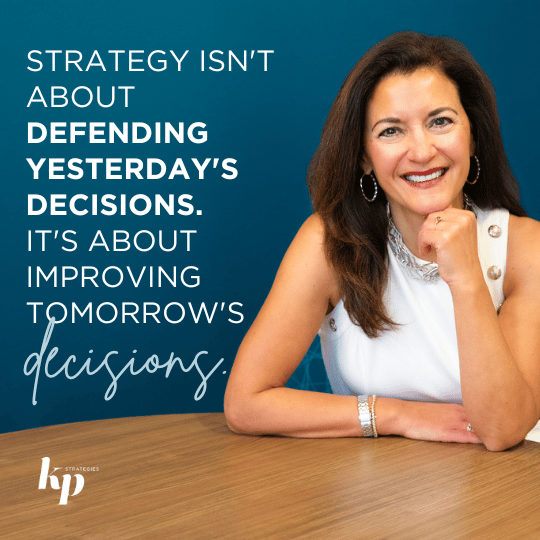
Strategy isn’t about defending yesterday’s decisions. It’s about improving tomorrow’s decisions.
That’s one of the clearest patterns I’ve observed working with CEOs.
CEO Takeaways
- Protect strategy discussions from becoming operational updates.
- Challenge assumptions as often as you review results.
- Enterprise value grows when leaders spend as much time looking forward as looking back.